Roasted vegetable quinoa bowls provide a nutrient-dense, plant-based meal combining fiber-rich grains with oven-charred seasonal produce. This versatile dish relies on high-heat roasting to caramelize the natural sugars in vegetables, creating a savory foundation for protein-packed quinoa. Consistent results come from precise timing and uniform chopping, ensuring every bite contains a balanced texture. Whether meal prepping for busy work weeks or serving a light family dinner, this recipe delivers reliable, wholesome nourishment without requiring complex culinary techniques.
| Prep Time | Cook Time | Total Time | Servings | Difficulty | Cuisine |
|---|---|---|---|---|---|
| 15 minutes | 30 minutes | 45 minutes | 4 | Easy | Mediterranean |
Why This Recipe Works
This recipe achieves success because it optimizes the maillard reaction during the roasting process, which transforms simple vegetables into flavor powerhouses. The inherent nuttiness of quinoa provides the perfect sturdy base, absorbing the savory juices released by the roasting produce without becoming mushy or losing its integrity.
Experience shows that building bowls this way allows for endless customization based on pantry staples and seasonal availability. By mastering the fundamental ratio of grain to vegetable, home cooks create a sustainable foundation for healthy eating patterns throughout the entire year.
Ingredients
| Ingredient | Quantity | Notes |
|---|---|---|
| Quinoa | 1 cup | Rinse thoroughly to remove bitter saponin |
| Bell Peppers | 2 large | Diced into one-inch pieces |
| Zucchini | 2 medium | Sliced into half-moons |
| Red Onion | 1 large | Cut into thick wedges |
| Olive Oil | 3 tablespoons | Extra virgin preferred for roasting |
| Dried Oregano | 1 teaspoon | Provides earthy, herbal notes |
| Sea Salt | 0.5 teaspoon | Adjust according to personal preference |
| Lemon Juice | 2 tablespoons | Adds necessary acidity to cut richness |
Step-by-Step Instructions
Preparing the Grains
- Rinse one cup of dry quinoa under cold running water using a fine-mesh sieve.
- Combine rinsed quinoa with two cups of water in a medium saucepan over high heat.
- Bring the mixture to a boil before reducing the heat to low and covering the pan.
- Simmer for fifteen minutes until the water absorbs fully and tails appear on the seeds.
- Fluff the cooked quinoa gently with a fork and set aside to cool slightly.
Roasting the Vegetables
- Preheat your oven to 400 degrees Fahrenheit to ensure rapid caramelization.
- Toss the chopped bell peppers, zucchini, and red onion wedges with olive oil, salt, and oregano on a large baking sheet.
- Spread the vegetables in a single layer to prevent steaming and encourage browning.
- Roast the mixture for twenty-five to thirty minutes, tossing halfway through for even cooking.
- Remove from the oven once the vegetables achieve tender, golden edges.
Assembling the Bowls
- Divide the fluffy quinoa equally among four serving bowls.
- Top each portion with an even amount of the roasted vegetable mixture.
- Drizzle fresh lemon juice over the top to brighten the overall flavor profile.
Chef Tips for Perfect Results
- Use high-quality parchment paper to line your baking sheet, which prevents sticking and simplifies cleanup.
- Ensure vegetables are cut to a uniform size to prevent smaller pieces from burning before larger ones soften.
- Allow the quinoa to rest covered for five minutes after cooking to improve texture and moisture retention.
- Add fresh herbs like parsley or cilantro immediately before serving to maintain bright, aromatic notes.
- Whisk the lemon juice with a splash of olive oil and garlic powder for a quick, emulsified dressing.
Common Mistakes to Avoid
Overcrowding the baking sheet results in steaming rather than roasting, leading to soggy, pale vegetables instead of caramelized ones. Use two baking sheets if necessary to ensure sufficient space between pieces for heat circulation.
Skipping the rinse step for quinoa introduces a bitter, soapy aftertaste caused by naturally occurring saponins on the grain exterior. Always rinse until the water runs clear to ensure a pleasant, neutral flavor in your final bowl.
Variations and Substitutions
| Ingredient | Substitution | Impact on Flavor |
|---|---|---|
| Zucchini | Yellow Squash | Minimal impact; slightly sweeter flavor profile |
| Red Onion | Shallots | Adds a milder, more delicate onion sweetness |
| Oregano | Dried Thyme | Provides a more floral and earthy undertone |
| Lemon Juice | Apple Cider Vinegar | Introduces a deeper, more pungent tanginess |
Serving Suggestions and Pairings
Serve these bowls alongside a side of hummus or a dollop of Greek yogurt for added creaminess. For a more substantial main dish during autumn gatherings, garnish the bowls with toasted pumpkin seeds or feta cheese. These bowls perform well as a cold salad alternative for picnics or as a warm comfort meal on chilly evenings.
Storage and Reheating
| Method | Duration | Instructions |
|---|---|---|
| Refrigerator | 4 days | Keep in an airtight glass container |
| Microwave | 1 minute | Heat on high with a damp paper towel cover |
| Stovetop | 3 minutes | Sauté briefly in a pan with a splash of water |
Nutritional Information
Approximate values per serving based on standard recipe proportions.
| Nutrient | Amount per Serving |
|---|---|
| Calories | 320 |
| Protein | 9g |
| Fat | 12g |
| Carbohydrates | 48g |
| Fiber | 7g |
Frequently Asked Questions
Can I add extra protein to my quinoa bowl?
Adding chickpeas or cubed tofu provides a significant boost to the protein content of these bowls. Mix these ingredients into the vegetables before roasting to infuse them with seasonings and crisp edges.
How do I know when the vegetables are fully roasted?
Vegetables are perfectly roasted when they show visible charring on the edges and yield easily to a fork. This visual cue confirms the caramelization process has finished while maintaining a pleasant, firm structure.
Is there a way to prevent quinoa from becoming mushy?
Using the exact ratio of two parts water to one part quinoa prevents the grains from absorbing too much liquid during the cooking process. Remove the lid immediately after the resting phase to allow excess steam to escape.
Can this meal be prepared in advance?
These bowls serve as an excellent component for weekly meal prep when stored in individual containers. Keep the roasted vegetables and quinoa in the same container, but add fresh garnishes only when ready to consume.
What is the best way to revive leftovers?
Reheating leftovers on the stovetop with a small amount of liquid restores moisture to the quinoa. Avoid excessive microwave time to prevent the vegetables from becoming soft and losing their fresh texture.
Incorporating roasted vegetable quinoa bowls into your regular cooking rotation provides a reliable way to consume nutrient-dense whole foods. Experiment with seasonal produce to keep the flavors fresh and exciting throughout the year. With minimal cleanup and high nutritional yield, this simple dish stands as a cornerstone of balanced eating. Enjoy the vibrant colors and earthy taste of this satisfying, wholesome meal every single time you prepare it in your kitchen.
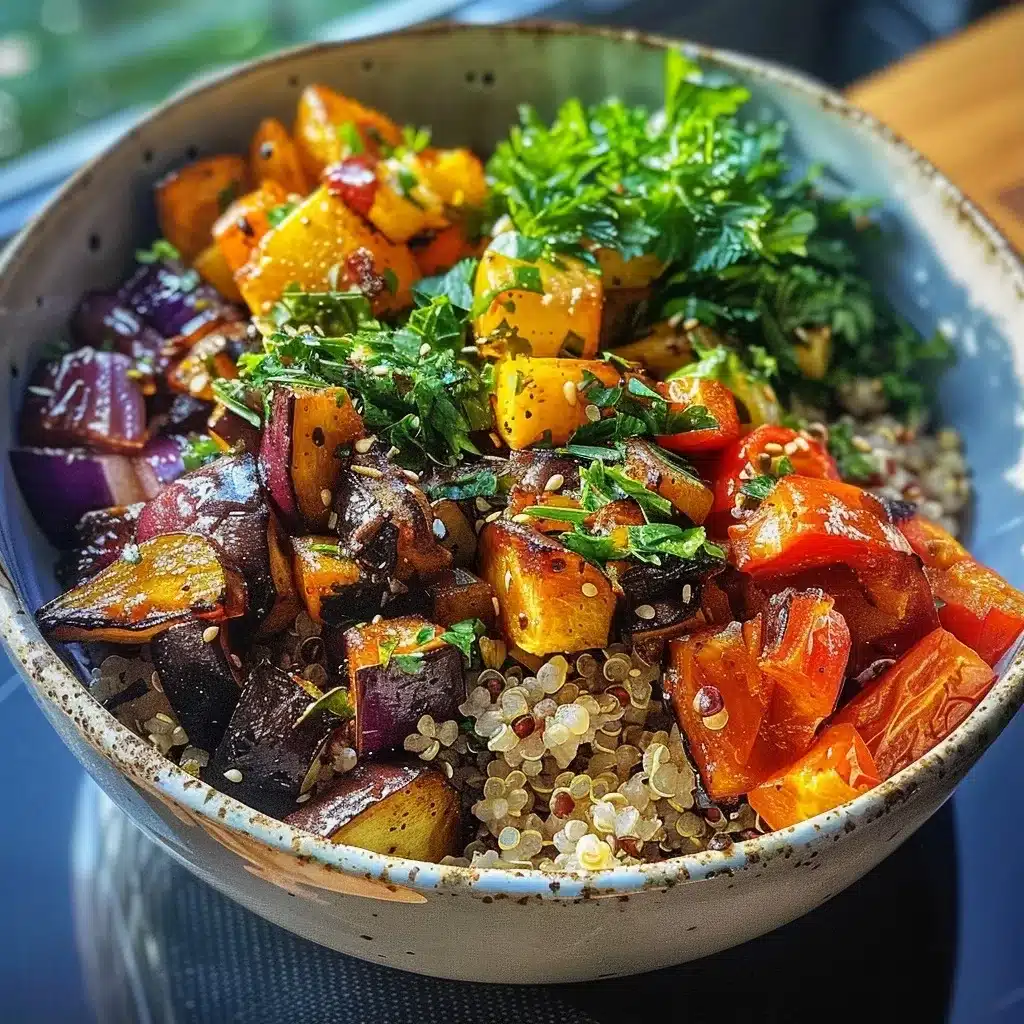
Roasted Vegetable Quinoa Bowls
Ingredients
Method
- Rinse the quinoa under cold water using a fine-mesh sieve to remove bitterness.
- In a medium saucepan, combine quinoa and 2 cups of water.
- Bring to a boil, then reduce heat to low, cover, and simmer for 15 minutes.
- Fluff with a fork once liquid is absorbed and set aside.
- Preheat oven to 400°F (200°C).
- Toss the bell peppers, zucchini, and red onions with olive oil, oregano, and salt on a large baking sheet.
- Roast for 20-25 minutes or until vegetables are tender and charred.
- Divide the cooked quinoa into bowls and top with roasted vegetables.
- Drizzle with fresh lemon juice before serving.